
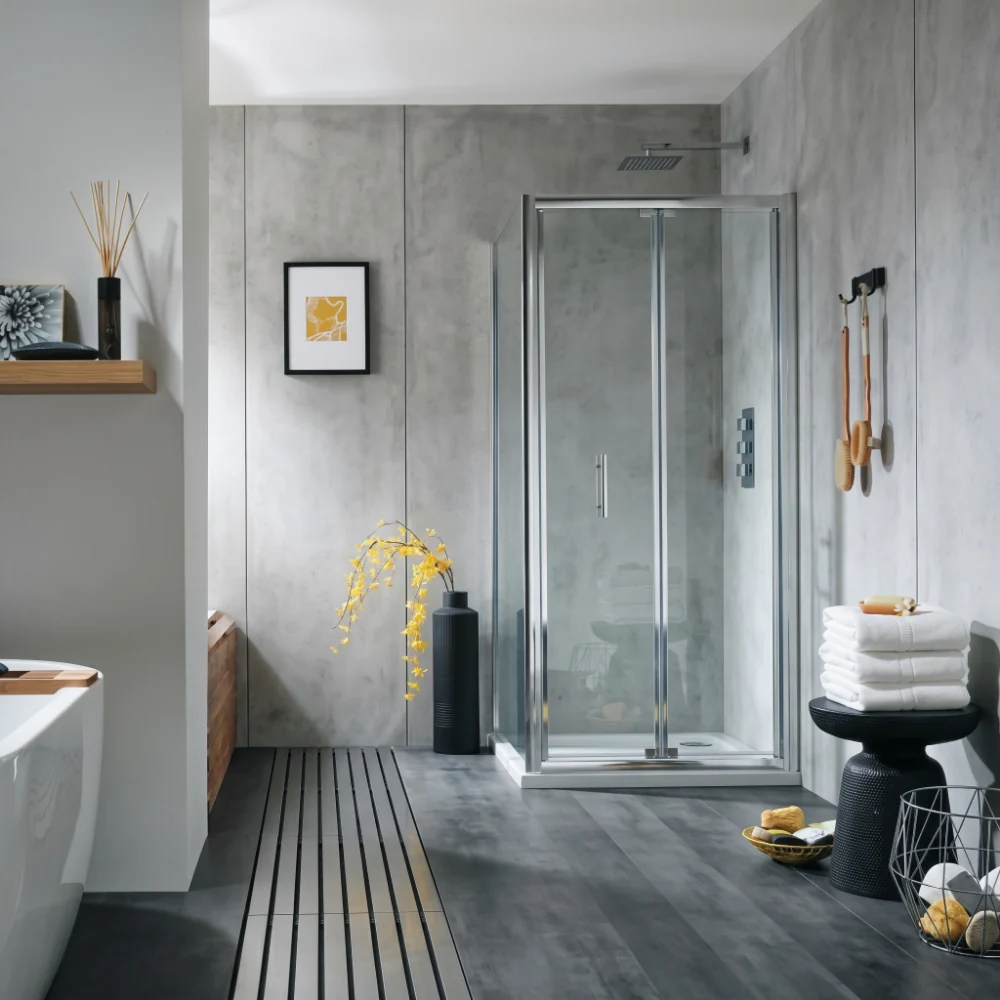
A small bathroom can feel crowded even when every fixture fits on the floor plan. The problem often appears when a door opens, a drawer pulls out, or someone steps away from the shower. A bi fold shower door is worth considering when a single swinging panel would interfere with that movement, but its folding action still needs to be checked against the room.
The name describes a general door arrangement, not a promise that every model will fit every tight space. Panel dimensions, hinge positions, handles, and the direction of movement all affect daily use. Before choosing a finish, work through the path from the bathroom entrance to the shower and back again.
Map the Space Around the Shower Entrance
Start with a simple sketch showing the shower, toilet, vanity, and bathroom door. Add towel bars, projecting handles, and other details that are easy to miss in a basic floor plan. Measure the spaces between them rather than relying on how open the room looks.
Then consider how the room works with things in motion. Open the vanity drawers and bathroom door, and note where a shower panel might pass. A door that fits when everything else is closed may create an inconvenient daily sequence.
Include the place where a person stands to open the shower. The door’s movement should not force an awkward step around a fixture. Someone also needs room to step out and reach a towel without immediately encountering a handle or cabinet corner.
Use the selected model’s movement diagram to test that arrangement. Folding panels may move inward, outward, or through a combination allowed by their hardware. Never assume a particular opening direction solely because a product is described as bifold.
Measure the Finished Opening, Not the Old Door
When replacing an enclosure, the old door’s advertised size is only background information. Measure the finished opening that will receive the new unit. If tile or wall panels are being replaced, have the installer establish the final dimensions before the order is placed.
Follow the manufacturer’s measuring instructions for the specific product. These commonly require attention to width at more than one height, since opposite walls may not be perfectly parallel. Record the measurements instead of rounding them to the nearest familiar product size.
A listed adjustment range needs careful interpretation. Ask the installer how the chosen model accommodates differences in the opening and what limits apply. An adjustable frame does not mean that every uneven wall or incorrect opening can be corrected during installation.
Height and the mounting surface also deserve attention. Confirm that the shower base, threshold, and walls are suitable for the door’s required attachment. A product that appears correct in width can still be unsuitable for the construction beneath it.
Compare the Entry Space With the Folded Panels
The width of the enclosure is not necessarily the width available for stepping through. When the door folds, its panels and hardware still occupy space. Ask for the clear entry opening in the fully open position if the specification sheet does not show it.
Consider who will use the shower and how they move. A narrow passage may be acceptable to one person and frustrating to another. Do not assume that a folding mechanism alone makes an enclosure appropriate for someone with mobility needs.
If assistance or mobility equipment must be accommodated, discuss those requirements with a qualified bathroom designer or contractor before selecting the enclosure. The threshold, interior layout, and approach all matter alongside the door. A single product label cannot establish suitability for the whole room.
Think about the handle from both sides. It should be possible to operate the door as intended without reaching around an obstruction. Viewing a demonstration or a clear product video can help clarify the motion, but it does not replace checking measurements.
Look Beyond the Glass and Finish
A finish can coordinate with faucets and towel bars, but the working parts deserve equal attention. Review the hinges, seals, and any tracks or channels shown in the installation documents. Ask which components need routine cleaning and whether replacements can be obtained.
Make the following checks before purchasing a bi fold shower door:
- Confirm the finished opening and the model’s permitted size range.
- Check the complete panel movement against nearby fixtures.
- Verify the clear entry space with the panels fully open.
- Review the required mounting surfaces and installation instructions.
- Read the care guidance for glass, seals, and hardware.
Cleaning access is easier to assess before installation. Consider whether the folding arrangement lets you reach the panel edges and the areas around the hinges. A design that looks simple from outside may contain small spaces that deserve regular attention.
Use the manufacturer’s recommended cleaning methods for the chosen materials. Do not assume that a treatment advertised for the glass means the entire door requires no maintenance. Seals and hardware remain part of the enclosure and should be cared for as directed.
Settle the Practical Details Before Installation Day
Review the chosen model with the installer before scheduling the work. Confirm the opening, mounting requirements, panel movement, and delivery contents, and keep the instructions available. This is also the time to resolve any uncertainty about a nearby fixture rather than leaving it for installation day.
When reviewing options from Allsumhome, compare the exact model’s dimensions and opening arrangement with the room you measured. Choose the finish after the fit and movement make sense. The right folding door should provide a workable entrance and a manageable daily routine, not simply look compact in a photograph.
